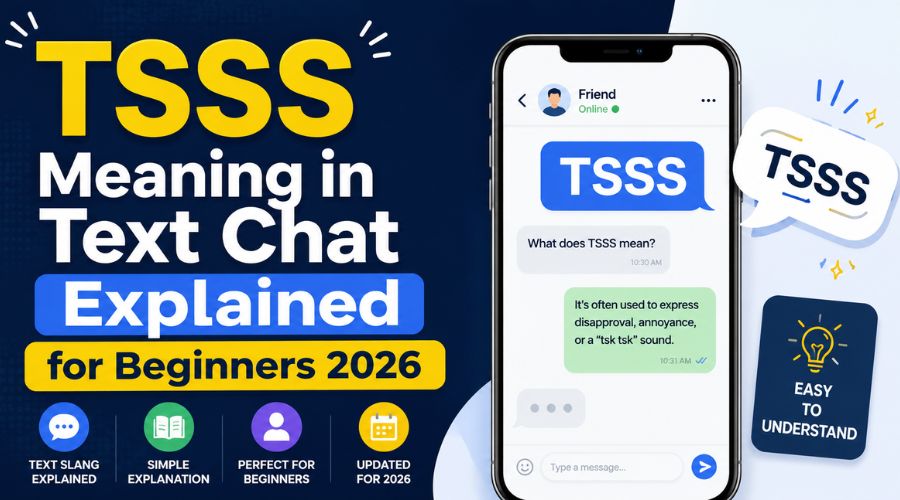
You tell a friend you forgot your charger again. The reply comes back in a second: “tsss 😒”. No words, just a hiss. Is your friend annoyed, teasing, or just being dramatic?
In chats, “tsss” is usually a typed sound, not an acronym. It imitates the sharp hiss or click people make when they disapprove, tease, or feel flustered. The meaning depends on tone and emojis, so look at who sent it and what came before it.
This guide explains the sound, how to read the tone, how to reply, and the grammar behind it.
TSSS Meaning: A Typed Sound, Not an Acronym
Most people search for TSSS expecting a full form, like “that stands for…”. But TSSS works more like “tsk” or “tut-tut.” It is an onomatopoeia: a word that copies a real sound.
In speech, people make this sound by pulling air through their teeth or clicking the tongue. It says things like:
- “I cannot believe you did that.”
- “Come on, really?”
- “Oh, stop it, you are embarrassing me.”
When people type it, they stretch the “s” to show how long the sound lasts: tsss, tssss, tsssss. The longer the hiss, the stronger the reaction.
Annoyed, Teasing, or Shy? Three Tones of TSSS
The same sound can carry three different feelings.
1. Annoyed or disapproving
“You forgot it AGAIN? tsss 😒”
The hiss shows disapproval. Clues: a frowning or eye-roll emoji, capital letters, and a complaint in the message.
2. Teasing and playful
“She really posted that? tsss 😂”
Here the hiss is mock disapproval between friends. Clues: laughing emoji, joking context, and a friendly relationship.
3. Shy or flustered
“You looked so good yesterday.” / “tsss stop 🙈”
Sometimes the sound is a way of brushing off a compliment. Clues: a covering-face or blushing emoji and words like “stop” or “you are so annoying” said with a smile.
4 Real TSSS Chats (and the Best Reply for Each)
Chat 1: The annoyed one
Sara: I forgot your book at home again Ali: tsss 😒
Best reply: “Sorry, sorry! I’ll bring it tomorrow, I promise.” Why: the hiss signals mild disapproval, so a quick apology and a fix ends the tension.
Chat 2: The teasing one
Noor: She really posted that photo 😭 Mehak: tsss 😂 I can’t
Best reply: “I know, right? Someone needs to take her phone.” Why: the tone is playful, so match the humor.
Chat 3: The shy one
Imran: You did amazing in the presentation today Hira: tsss stop 🙈
Best reply: “I mean it! You were great.” Why: the sound is a flustered reaction, not a request to stop. A sincere follow-up keeps the warmth.
Chat 4: The Roman Urdu mix
Zara: tsss yaar, phir late aayi tum 😤
Best reply: “Sorry yaar! Bas 5 minute mein pohanch rahi hoon.” Why: it is mild annoyance, so give a time and a short apology.
When you cannot tell: ask lightly. “Haha, was that a good tsss or a bad tsss?” keeps the mood easy.
Grammar Corner: Why TSSS Is an Interjection
Part of speech
TSSS is an interjection: a short word or sound that expresses a feeling and does not join the grammar of a sentence. “Wow,” “ugh,” and “oops” are other examples. You can drop it in at the start or end of a message without changing the rest of the sentence.
Why the extra letters?
There is no spelling rule for a sound. People add letters to show length and feeling. “tss” is short and sharp. “tsssss” is long and dramatic. Both mean the same thing, with different intensity.
Capitalization and punctuation
- tsss in lowercase feels casual and offhand.
- TSSS in capitals feels louder and more dramatic.
- Tsss… with dots suggests a pause, a sigh, or hesitation.
- It has no plural form and no verb tense. It is a reaction, not a statement.
TSSS vs similar reaction sounds
| Reaction | What it expresses | Typical tone |
| tsss / tsk | Disapproval or mock disapproval | Annoyed or teasing |
| SMH | Shaking my head (disbelief) | Disappointed |
| pfft | Dismissal | Unimpressed |
| ugh | Frustration | Tired or annoyed |
The key difference: SMH is an abbreviation of words, while tsss is a sound. That is why SMH has a full form and TSSS does not.
Spelling Variants: TSS, TSSS, TSSSS, and Tsk Tsk
You will see several forms, and they overlap:
- tsk tsk or tut-tut: the traditional written forms of the same disapproving sound.
- tss, tsss, tssss: typed hiss versions, longer for more feeling.
- tssss meaning and tsss meaning are searched often because people try different spellings.
The core meaning stays the same. The differences are length and style, not a new definition.
Does TSS or TSSS Also Work as an Acronym?
Sometimes. Some slang lists read “TSS” as “that’s so sweet” or “that’s so sad,” but these readings are less common and not well documented. In health writing, TSS also stands for toxic shock syndrome, which is unrelated to chat.
Because there is no reliable full form, do not assume an acronym. Look first at the sound meaning, then at the surrounding words. If the message includes a clear phrase after it, such as “tss that’s so sweet,” the sender is likely adding words to the sound, not defining it.
Clues That Tell You the Tone
Before you reply, check what surrounds the sound:
- The emoji. 😒 and 😤 point to annoyance. 😂 and 😏 point to teasing. 🙈 points to shyness.
- The previous message. A complaint or mistake leads to disapproval. A compliment leads to a flustered reaction.
- The relationship. A close friend teasing is different from a coworker or older relative.
- The length of the hiss. A very long “tssssss” is usually more dramatic or playful.
If two clues point the same way, reply with confidence. If they disagree, ask lightly.
How to Reply to TSSS
| Situation | Easy reply |
| They sound annoyed | “Sorry, I’ll fix it!” |
| They are teasing | “Haha, don’t judge me!” |
| They are shy about a compliment | “I mean it, though.” |
| You cannot tell | “Was that a good tsss or a bad tsss?” |
Match the tone first. Humor with teasing, sincerity with shyness, and a quick fix with annoyance.
Does the Platform Change the Meaning?
No. The sound means the same thing on WhatsApp, Snapchat, Instagram, and TikTok. What changes is how it is used: comments under videos use it as a quick reaction, while private chats use it for a personal tone.
When to Use TSSS Yourself
TSSS works well with friends, in jokes, and as a playful reaction. Skip it with teachers, managers, and older relatives, because a hiss can sound rude or sarcastic without a smile or tone of voice to soften it. In those cases, write a full sentence: “I’m a little disappointed, but let’s fix it.”
Common TSSS Mistakes
- Searching for an acronym that does not exist. It is mainly a sound.
- Assuming it is always rude. It is often teasing.
- Ignoring the emoji. The emoji usually tells you the tone.
- Sending it to someone who may not know the sound. It can be misread.
- Replying with a long explanation. A short, light reply is better.
Related Reads
- Seeing short reactions on social platforms? Read TT meaning on TikTok.
- Looking for polite ways to acknowledge a message? See this is noted: other ways to say it.
FAQs
What does TSSS mean in text?
In chats, TSSS is usually a typed sound that imitates a hiss or click of the tongue. It shows disapproval, teasing, or a flustered reaction. The tone depends on the emoji, the previous message, and your relationship with the sender.
Is TSSS an acronym?
Mostly no. It is an onomatopoeia, a word that copies a sound, similar to “tsk.” Some slang lists give acronym readings for TSS, but they are less common and not well documented.
Is TSSS rude?
Not always. Between friends it is often playful teasing. It can feel rude if the context is a complaint or if the sender is a manager or older relative. Look at the emoji and the situation before deciding.
What does TSSS mean from a guy or a girl?
The sender’s gender does not change the meaning. What matters is the relationship, the emoji, and the message before it. If you are unsure, ask lightly whether it was a friendly or annoyed tsss.
What is the difference between TSSS and tsk tsk?
They express the same sound of disapproval. “Tsk tsk” is the traditional written form, while “tsss” is a typed hiss version where extra letters show length and feeling.