“Have a good day” is a polite farewell used to wish someone happiness, comfort, and success for the rest of their day. Grammatically, it’s an imperative sentence with an implied subject (“[You] have a good day”), making “have” the correctly conjugated base-form verb — not a mistake, even though it sounds like a command.
It’s used when:
- Ending a phone call or conversation
- Leaving a store, office, or meeting
- Signing off an email or text message
- Wishing someone well before they start their day
The Grammar Behind “Have a Good Day” (Explained Simply)
This is where most learners get tripped up, so let’s slow down and unpack it properly.
Why Is It “Have” and Not “Has” or “Having”?
“Have a good day” is an imperative sentence — a sentence that gives instructions, requests, or wishes. Imperative sentences drop the subject (“you”) and use the base form of the verb.
- ✅ Have a good day (correct — base form, implied “you”)
- ❌ Has a good day (incorrect — “has” only pairs with he/she/it)
- ❌ Having a good day (incorrect as a standalone wish — needs a helping verb, like “I am having a good day”)
Quick comparison:
| Sentence Type | Example | Grammatically Correct? |
| Imperative wish | “Have a good day.” | ✅ Yes |
| Statement (present continuous) | “I am having a good day.” | ✅ Yes (different meaning) |
| Question | “Are you having a good day?” | ✅ Yes |
| Incorrect mixing | “Having a good day!” (as a farewell) | ⚠️ Informal/incomplete, avoid in formal writing |
“Good” vs. “Well”: Which One Is Correct?
This is one of the most common mix-ups related to this phrase.
- “Good” is an adjective — it describes the noun “day.” → Have a good day. ✅
- “Well” is typically an adverb — it describes a verb, not a noun. → You did well. ✅ but Have a well day ❌
Since “day” is a noun, it needs an adjective (“good”) to describe it — not an adverb (“well”). That’s why you’ll never hear a native speaker say “have a well day.”
Do You Need a Comma or Exclamation Mark?
- Casual writing or texting: “Have a good day!” (exclamation mark adds warmth)
- Formal emails: “Have a good day.” (a period keeps it professional)
- Avoid: trailing “Have a good day,” into another sentence without proper punctuation — treat it as a complete, standalone sentence.
Is It Rude to Say “Have a Good Day” and Walk Away?
No — this concern comes up often with English learners worried about tone. “Have a good day” is a polite, socially accepted way to close a conversation. It’s a recognized signal that the interaction is ending on a positive note, not an abrupt dismissal.
Where This Phrase Comes From
The expression traces back to older English farewells like “fare thee well,” evolving over centuries into the everyday goodwill phrase we use now. Positive closing expressions like this one have stuck around across generations because they leave conversations on a warm, memorable note — which is exactly why the phrase shows no sign of disappearing from daily use.
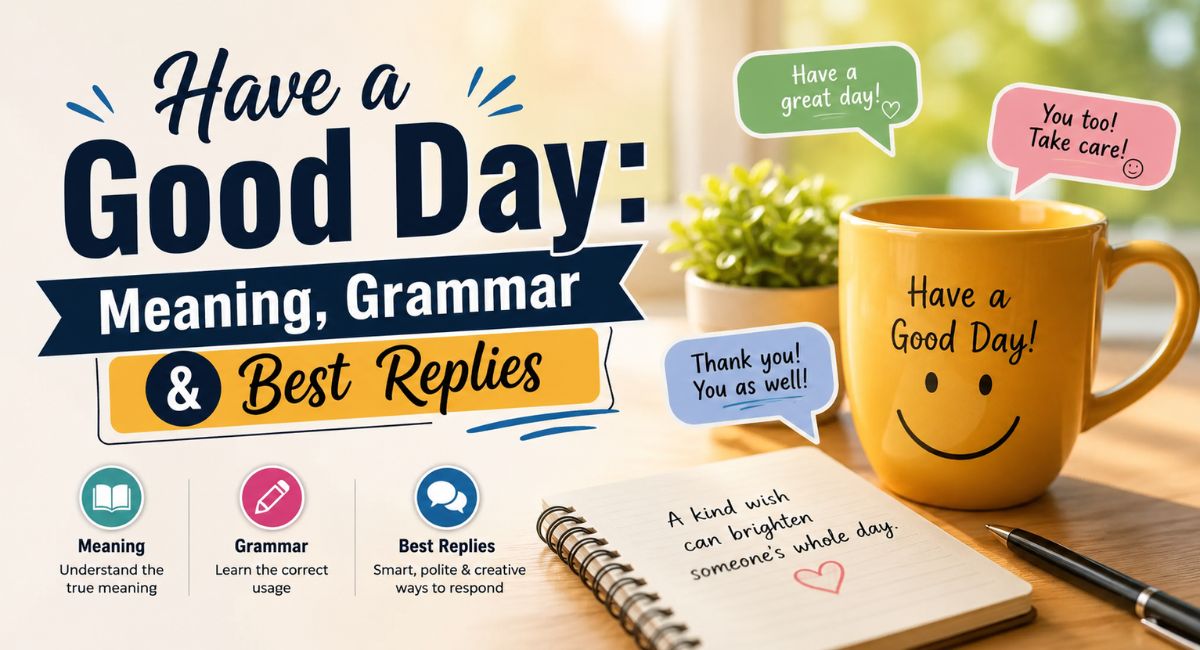
How to Respond to “Have a Good Day”
Knowing how to reply is just as important as knowing how to say it — and this trips up a lot of non-native speakers.
Natural responses:
- “You too!”
- “Thanks, you as well!”
- “Same to you!”
- “Thank you, I will!”
- “You too, take care!”
Avoid this common mistake: Don’t just repeat the exact same phrase back verbatim (“Have a good day” → “Have a good day”) in casual speech — it can sound robotic. Adding “too” or “as well” makes your response feel natural and reciprocal.
Professional & Polite Alternatives
In workplace emails, customer service, or formal meetings, a polished alternative can sound more thoughtful and intentional:
- Wishing you a productive day
- Have a wonderful day ahead
- Hope your day goes smoothly
- Take care and have a great day
- Enjoy the rest of your day
- Have a pleasant afternoon/evening
These work well for emails, client calls, job interviews, and formal correspondence.
40+ Other Ways to Say “Have a Good Day” (By Category)
Casual & Everyday
- Have a great day
- Enjoy your day
- Have an awesome day
- Catch you later, have fun today
- Enjoy the rest of your day
- Stay happy today
- Have a fabulous day
- Take it easy today
Warm & Heartfelt 9. Have a wonderful day 10. Wishing you a lovely day 11. Have a beautiful day 12. Hope your day is filled with joy 13. Wishing you a joyful day 14. Have a lovely rest of your day 15. Sending good vibes your way
Professional & Formal 16. Hope your day goes well 17. Have a productive day 18. Wishing you a fantastic day ahead 19. Have a pleasant day 20. Have a successful day 21. Enjoy the remainder of your day
Motivational & Uplifting 22. Make it a great day 23. Have a positive day 24. Have an inspiring day 25. Have a meaningful day 26. Seize the day 27. Make today count
Calm & Supportive 28. Wishing you a peaceful day 29. Have a relaxing day 30. Take care today 31. Hope today treats you well 32. Have a stress-free day
Bright & Cheerful 33. Have a bright day 34. Have a delightful day 35. Have a cheerful day 36. Have an amazing day 37. Have a fantastic day ahead
Spiritual / Faith-Based 38. Have a blessed day 39. Stay blessed today 40. God bless your day
Texting & Casual Shorthand 41. HAGD (Have a good day) 42. Have a good one 🙂 43. Good vibes only today ✨
“Good Day” vs. “Nice Day” vs. “Great Day”: What’s the Difference?
Learners often ask whether these are interchangeable. Here’s the honest breakdown:
| Phrase | Formality | Emotional Intensity | Best Used For |
| Have a good day | Neutral | Standard | Any situation, default choice |
| Have a nice day | Slightly casual | Mild | Everyday small talk, retail/service |
| Have a great day | Casual-friendly | Higher enthusiasm | Friends, positive send-offs |
| Have a wonderful day | Warm/polite | High | Emails, sincere well-wishes |
Bottom line: “Good,” “nice,” and “great” are all grammatically correct and interchangeable in meaning — the difference is purely tone and enthusiasm level, not correctness.
Common Mistakes to Avoid
- ❌ “Have a good’s day” — never add an apostrophe/possessive to “day”
- ❌ “Have good day” — don’t drop the article “a”; it’s required before a singular countable noun
- ❌ “Hope you have well day” — mixing “well” with “day” is grammatically incorrect
- ❌ Using “Have a good day” sarcastically in professional writing — tone doesn’t always translate in text, so save sarcasm for spoken conversation
FAQs
Is “Have a good day” grammatically correct? Yes. It’s an imperative sentence with an implied subject (“you”), using the base form of the verb “have.” This structure is standard and fully correct in English.
Why do we say “have” and not “has” a good day? Because imperative sentences always use the base form of the verb, regardless of who they’re addressed to. “Has” is only used with third-person singular subjects (he/she/it) in regular statements, not commands or wishes.
Is it “have a good day” or “have a nice day”? Both are correct. “Good” and “nice” are near-synonyms as adjectives here; the choice is a matter of tone, not grammar. “Nice” tends to sound slightly more casual and is common in customer service settings.
What’s a more professional way to say “Have a good day”? Try “Wishing you a productive day,” “Hope your day goes well,” or “Have a pleasant day.” These sound more polished for emails, client communication, and formal workplace settings.
How should I respond when someone says “Have a good day” to me? The most natural response is “You too!” or “Thanks, you as well!” Simply repeating the exact phrase back can sound stiff in casual conversation.
Final Thoughts
“Have a good day” isn’t just a throwaway phrase — it’s grammatically sound, socially meaningful, and flexible enough to fit almost any tone, from a quick text to a formal email sign-off. Once you understand why the grammar works the way it does, you’ll never second-guess it again — and with 40+ alternatives in your back pocket, you’ll always have the right words for the moment.