Zesty Meaning: You heard someone say “zesty” — maybe about food, maybe about a person on TikTok — and now you’re not sure which meaning applies. That’s completely normal. “Zesty” is one of those English words living a double life: a polite, everyday adjective in the dictionary, and a completely different vibe in internet slang.
This guide breaks down both meanings clearly, shows you exactly how to use the word correctly in a sentence, and explains where the slang version came from. No confusing grammar jargon — just simple, direct answers.
What Does Zesty Mean? (Quick Answer)
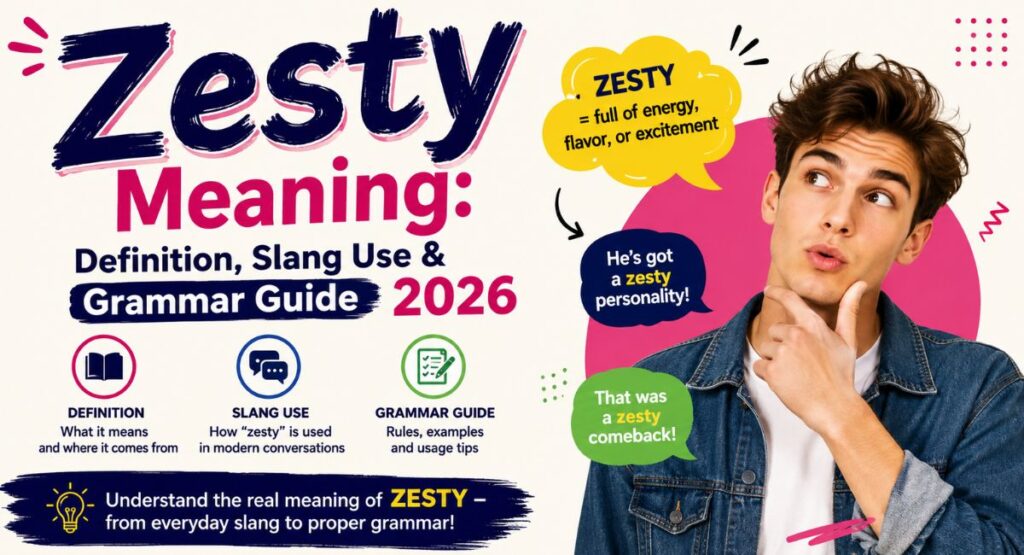
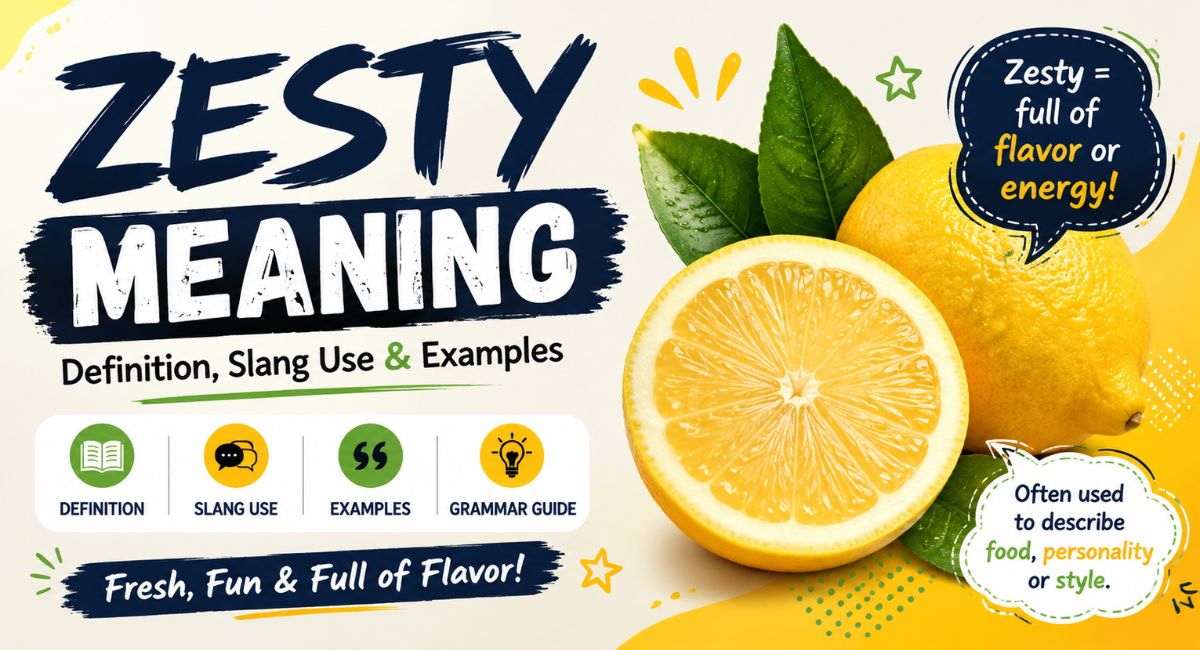
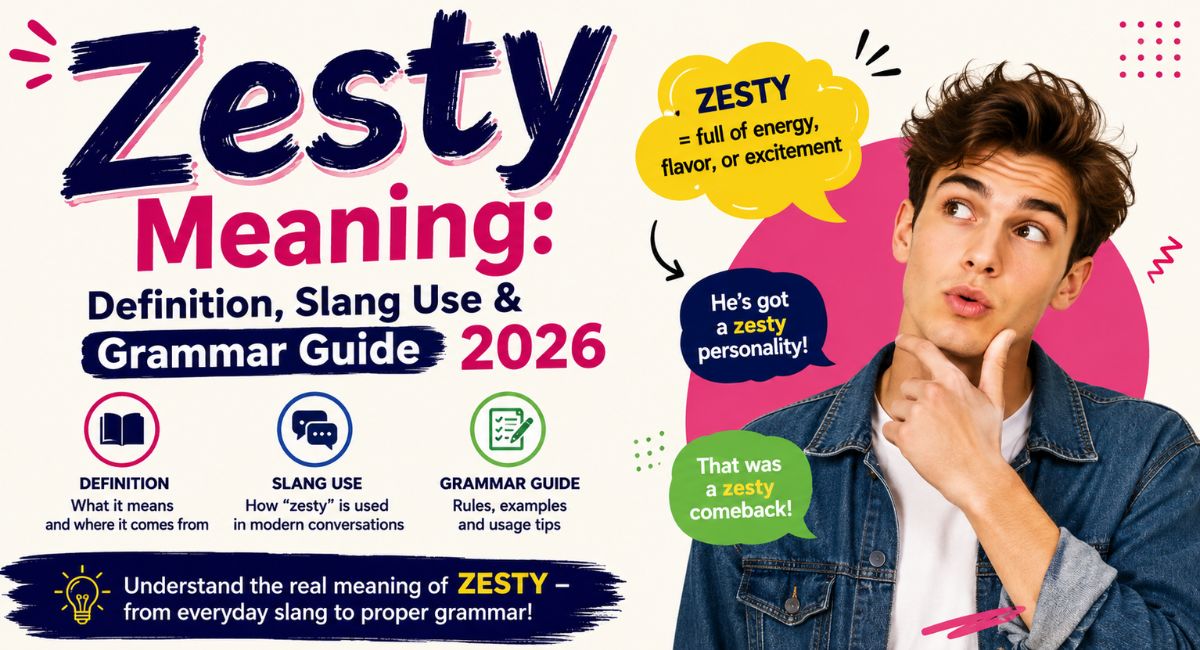
Zesty (adjective) means having a lively, energetic, or pleasantly sharp quality — often used to describe food with a strong citrus or spicy flavor, or a person with bold, enthusiastic energy. In internet slang, “zesty” describes someone (usually a guy) who acts flamboyant, dramatic, or extra.
That’s the short version. Now let’s go deeper into both the standard and slang meanings, plus how to actually use the word correctly.
Zesty: Grammar Breakdown
Since “zesty” trips up a lot of English learners, here’s the exact grammar picture before anything else.
| Feature | Detail |
| Part of speech | Adjective |
| Pronunciation | /ˈzes-tee/ (ZES-tee) |
| Base word | Zest (noun/verb) |
| Comparative form | Zestier |
| Superlative form | Zestiest |
| Adverb form | Zestily |
| Related noun | Zestiness |
Featured Snippet Answer: Zesty is an adjective. It describes a noun — a flavor, a dish, or a personality. You cannot use “zesty” as a verb or noun on its own; the related noun is zest, and the related verb is to zest (as in “zest a lemon”).
How to Use “Zesty” Correctly in a Sentence
Because it’s an adjective, “zesty” sits before the noun it describes or after a linking verb like “is,” “seems,” or “tastes.”
- ✅ Correct: The salad had a zesty lemon dressing.
- ✅ Correct: This sauce tastes really zesty.
- ❌ Incorrect: The salad zesty had dressing. (wrong word order)
- ❌ Incorrect: She has a lot of zestiness zesty. (don’t mix noun and adjective forms)
Quick rule: If you’re describing how much flavor or energy something has, use zest (noun). If you’re describing the thing itself, use zesty (adjective).
The Original (Dictionary) Meaning of Zesty
Long before it became a slang term, “zesty” was a completely ordinary English word rooted in cooking and personality description.
In cooking, zesty describes food with a sharp, tangy, or citrusy flavor — think lemon, lime, chili, or vinegar-based dressings. A “zesty marinara” or “zesty ranch” simply means it has an extra kick of flavor.
In personality, zesty describes someone lively, enthusiastic, and full of energy — similar to calling someone “vibrant” or “spirited.” This usage has existed in English for over a century, long before social media existed.
The word comes from zest, which originally referred to the outer peel of a citrus fruit (still used this way today — “lemon zest”). Over time, English speakers borrowed that sharp, bright quality to describe flavor and, later, personality.
Synonyms and Antonyms of Zesty
Understanding synonyms helps you build vocabulary and avoid repeating the same word.
Synonyms (similar meaning):
- Tangy
- Piquant
- Lively
- Vibrant
- Spirited
- Energetic
- Flavorful
Antonyms (opposite meaning):
- Bland
- Dull
- Flat
- Lifeless
- Mild
Example comparison: “The dip was zesty” (full of flavor) vs. “The dip was bland” (no flavor at all).
Zesty Meaning in Slang (Gen Z Usage)
Here’s where the word takes a sharp turn. On TikTok, Instagram, and Twitter/X, “zesty” has become slang used mostly to describe a guy’s flamboyant, dramatic, or over-the-top energy — think bold fashion choices, exaggerated expressions, or a confident, expressive vibe.
This slang usage started circulating in online communities and picked up massive traction around 2021–2022, spreading through TikTok comment sections and reaction videos before becoming mainstream Gen Z vocabulary by 2023.
Important nuance: the tone depends entirely on who’s saying it and why.
- Among close friends, it’s often playful teasing with zero harm intended.
- From strangers online, it can be used to question someone’s masculinity, which carries a more critical, sometimes hurtful edge.
Because of that second use, it’s worth using this word carefully — especially with people you don’t know well.
Examples of Slang “Zesty” in Sentences
- “My roommate bought a pink espresso machine — honestly, zesty king behavior.”
- “He’s been dressing zesty lately, and it actually looks really good.”
- “Bro ordered a lavender oat-milk latte. Zesty behavior detected.”
Standard vs. Slang: Side-by-Side Comparison
| Standard Meaning | Slang Meaning | |
| Part of speech | Adjective | Adjective (informal) |
| Describes | Flavor or general enthusiasm | A person’s flamboyant energy |
| Tone | Neutral, positive | Can be playful OR critical |
| Where it’s used | Recipes, formal writing, everyday speech | TikTok, Instagram, Twitter/X, texting |
| Safe for formal writing? | Yes | No |
Should You Use “Zesty” in Formal or Professional Writing?
Short answer: only the standard meaning.
If you’re writing an email, essay, resume, or any formal document, “zesty” is perfectly acceptable when describing flavor or genuine enthusiasm — for example, “She brought a zesty energy to the presentation.”
Avoid the slang meaning entirely in professional, academic, or formal settings. It’s informal internet slang and can be misread as mocking someone, which isn’t appropriate outside casual conversation with people who understand the context.
When to Use “Zesty” (and When to Avoid It)
Use it when:
- Describing food, drinks, or flavor (dressing, sauce, marinade)
- Complimenting someone’s genuine enthusiasm or energy in writing
- Joking casually with close friends who understand the slang tone
Avoid it when:
- Talking about or to someone you don’t know well (slang sense)
- Writing formal, academic, or professional content
- You’re unsure how the other person will interpret the tone
Frequently Asked Questions
Is “zesty” a positive or negative word? In its standard meaning, it’s always positive — it describes good flavor or lively energy. In slang, it depends on context: friends usually mean it warmly, while strangers may use it more critically.
What part of speech is “zesty”? “Zesty” is an adjective. It describes a noun, such as “zesty sauce” or “zesty personality,” and cannot be used as a verb or standalone noun.
What is the difference between “zest” and “zesty”? “Zest” is a noun (or verb) referring to enthusiasm or citrus peel, while “zesty” is the adjective form used to describe something that has that quality.
Where did the slang meaning of “zesty” come from? The slang usage grew out of online communities and spread widely through TikTok around 2021–2022, becoming common Gen Z vocabulary by 2023.
Can I use “zesty” to describe a person in a good way? Yes. In standard English, calling someone “zesty” means they’re lively, enthusiastic, and full of energy — a genuine compliment.