POS Meaning: You saw “POS” in a text, a comment, or maybe on a receipt machine at the store — and now you’re stuck wondering which one it is.
Here’s the thing nobody tells you upfront: POS doesn’t have one meaning. It has three. And picking the wrong one in the wrong context can make you look completely lost.
This guide breaks down every version of POS — what it means, how to say it, how to spell it correctly, and where people mess it up. No guessing required.
Quick Answer: What Does POS Mean?
POS is an acronym with three common meanings depending on context:
- “Piece of S*”** — an insult, used online and in texting to call someone terrible.
- “Parent Over Shoulder” — a warning code teens text when a parent is watching their screen.
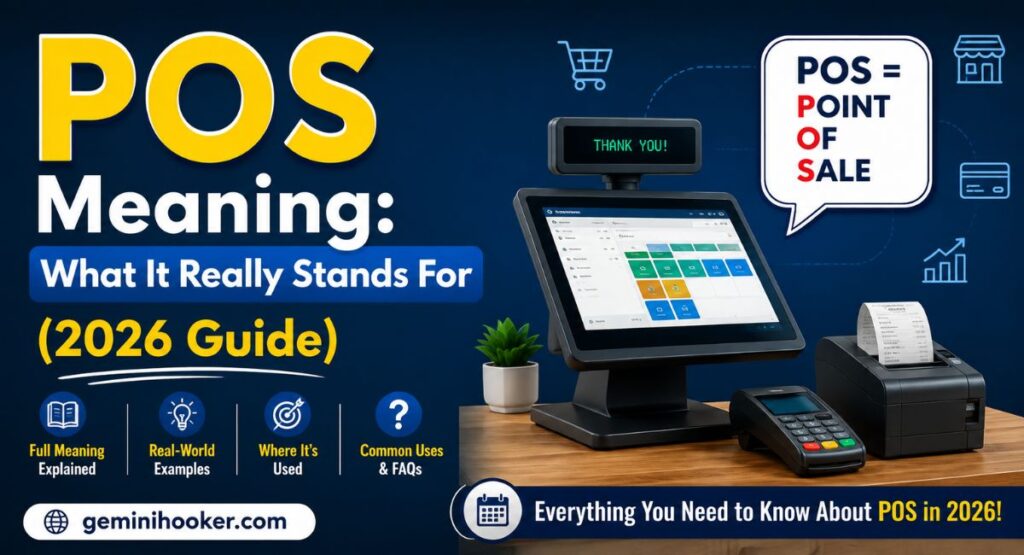
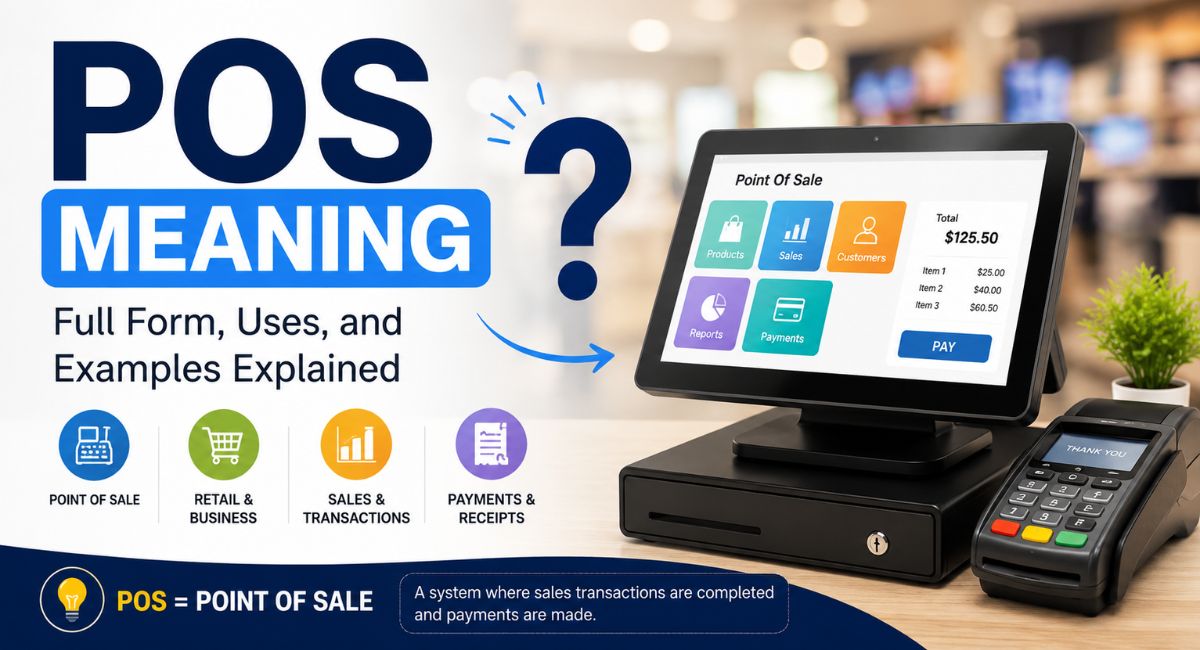
- “Point of Sale” — the checkout system or card machine used in retail and business.
Texting and social media almost always use meaning #1 or #2. Retail and business contexts use meaning #3.
Is “POS” a Noun, Verb, or Interjection? (The Grammar Breakdown)
This is the part most slang sites skip — and it’s exactly where people trip up.
Part of speech: POS functions as a noun in every one of its slang meanings.
- As an insult: it’s a predicate noun, used after “is” or “was” to label a person. “He is a POS.”
- As a warning code (“Parent Over Shoulder”): it functions as a standalone exclamatory phrase, similar to shouting “Fire!” — it’s a warning interjection, not a full sentence. “POS, gtg.”
- As “Point of Sale”: it’s used as a noun, often as part of a compound noun. “The POS system crashed.”
Pronunciation: In slang and warning-code use, POS is almost always spelled out letter by letter — “P-O-S,” never pronounced as one word like “poss.” In retail contexts, professionals also say it letter by letter, or as the full phrase “point of sale.”
Capitalization rule: POS is typically written in all caps in both slang and business use, since it’s an acronym. Lowercase “pos” appears casually in texting but isn’t grammatically standard. You’ll rarely see it written as “P.O.S.” with periods anymore — that style has mostly disappeared from casual writing.
Common Mistakes People Make With “POS”
- Mistake: Using POS to mean “Parent Over Shoulder” in a professional or retail conversation. Fix: Only use this meaning in casual texting with friends — never in business writing.
- Mistake: Writing “a POS” when the intended meaning is the retail system. Fix: Say “the POS system” or “our POS” — dropping “the” or “our” makes it read like the insult instead.
- Mistake: Treating POS as a full sentence. Fix: As a warning code, it works alone (“POS!”), but as an insult, it needs a subject and verb around it (“He’s such a POS”).
- Mistake: Confusing POS with POV. Fix: POV means “point of view,” not “point of sale” or an insult — they’re unrelated despite looking similar.
All Three Meanings of “POS” — Comparison Table
| Meaning | Full Form | Context | Part of Speech | Tone |
| Insult | Piece of S*** | Texting, social media, comment sections | Predicate noun | Harsh, negative |
| Warning code | Parent Over Shoulder | Texting between teens/friends | Interjection | Urgent, neutral |
| Business term | Point of Sale | Retail, finance, business software | Noun/compound noun | Professional, neutral |
Origin and History of “POS”
The insult version of POS traces back to the spoken phrase “piece of s***,” which has been used in English for decades, including heavily in military and working-class slang through the mid-1900s. When internet chat rooms and early texting took off, people shortened it to three letters — fast to type and easy to slide past basic word filters.
The “Parent Over Shoulder” meaning grew directly out of texting culture in the 2000s and 2010s, alongside similar warning codes like PAW (“parents are watching”) and PIR (“parent in room”). Teens needed a quick, coded way to warn friends mid-conversation without a parent catching on.
The retail meaning, Point of Sale, is actually the oldest of the three — it’s been standard business terminology since electronic cash registers and card readers became common in the late 20th century. It’s an entirely separate lineage from the slang versions and shows up in accounting, retail management, and software industries.
How “POS” Is Used on Different Platforms
Texting (SMS/iMessage) Both slang meanings show up here. “Parent Over Shoulder” is more common in real-time back-and-forth texting, since it’s a quick heads-up. Example: “POS, talk later.”
Twitter/X Almost exclusively the insult meaning. Quote tweets and callout posts use POS to label someone’s bad behavior publicly. Example: “This POS really thought nobody would notice.”
Reddit The insult meaning dominates in subreddits like relationship advice or AITA threads. Example: “Your landlord sounds like a total POS.”
Discord/Gaming Almost always the insult, aimed at toxic teammates or cheaters. Example: “Report that POS, he’s griefing again.”
Business software & retail listings Exclusively “Point of Sale” — as in POS systems, POS software, or POS terminals used by cashiers and store owners.
| Platform | Common Meaning | Example |
| Texting (friends) | Parent Over Shoulder / Insult | “POS, gtg” or “he’s such a POS” |
| Twitter/X | Insult | “This POS blocked me after getting called out” |
| Insult | “NTA, your coworker is a POS” | |
| Discord | Insult | “That POS just threw the game” |
| Business/retail | Point of Sale | “Our POS system needs an update” |
Examples of “POS” in Sentences
As an insult:
- “I can’t believe I trusted that POS for two years.”
- “He ghosted her after three months — certified POS behavior.”
- “That POS stole my parking spot on purpose.”
As a warning code:
- “POS, I’ll text you after dinner.”
- “Can’t talk, POS. Later.”
As “Point of Sale”:
- “The new POS system speeds up checkout by half.”
- “Our POS software syncs inventory automatically.”
- “Every POS terminal in the store needs a software update.”
Related Slang and Synonyms
If POS-as-insult isn’t quite the word you’re after, a few related terms carry similar or adjacent energy:
- Trash / Garbage — similar intensity, calling someone worthless.
- Sus — milder; means suspicious, not confirmed-bad.
- Opp — means enemy or opposition, less personal than POS.
- PAW (“Parents Are Watching”) — a close cousin of the “Parent Over Shoulder” warning code, used interchangeably by many teens.
| Term | Meaning | How It Compares to POS |
| Trash | Worthless, terrible | Similar intensity to insult meaning |
| Sus | Suspicious | Milder — doesn’t fully condemn someone |
| Opp | Enemy/rival | Less personal than calling someone a POS |
| PAW | Parents are watching | Same function as the warning-code meaning |
Is “POS” Appropriate to Use?
Depends entirely on which meaning you’re using.
- The insult meaning is profanity-adjacent. It’s not appropriate for professional settings, school assignments, or around younger kids who don’t know the context.
- The warning code meaning is harmless — it’s just a texting shorthand kids and teens use, similar to writing “brb.”
- The business meaning is completely standard professional vocabulary, used constantly in retail, accounting, and software contexts.
For parents: if your child texts “POS,” it’s far more likely to mean “Parent Over Shoulder” than the insult. Context — who they’re texting and what came before it — usually makes the meaning obvious.
When to Use (and Avoid) Each Meaning
Use the insult meaning when:
- Venting privately to close friends
- Writing informally about someone who genuinely wronged you
- The setting is casual and the audience won’t be offended
Avoid the insult meaning when:
- You’re on a professional or public account
- The person you’re describing might see it
- Kids, coworkers, or family are part of the conversation
Use “Point of Sale” when:
- Discussing retail software, checkout systems, or business tools
- Writing professional or technical content
Conclusion
POS isn’t a one-meaning acronym — it shifts completely based on where you see it. In a text between friends, it might be a quick warning that a parent walked in. In a comment section, it’s almost certainly an insult. On a receipt or in a business meeting, it’s simply “Point of Sale.”
Getting the grammar and context right isn’t just about sounding correct — it’s about not embarrassing yourself by using the wrong meaning in the wrong place. Now you’ve got all three, and you’ll never have to guess again.
4. POS Meaning:FAQs
What does POS mean in texting? In texting, POS most commonly means either “Parent Over Shoulder” (a warning that a parent is nearby) or “Piece of S***” (an insult), depending on the conversation’s tone and who’s texting.
Is POS a bad word? Only when used as the insult meaning (“Piece of S***”), which is considered mild profanity. As “Parent Over Shoulder” or “Point of Sale,” it’s completely neutral and appropriate.
What does POS mean on a receipt or at checkout? It stands for “Point of Sale,” referring to the system or terminal where a transaction is completed — including the card reader, software, and checkout counter.
Is POS a noun or a verb? POS functions as a noun in all its meanings. It’s used as a predicate noun when insulting someone, a compound noun in retail contexts (“POS system”), and a standalone interjection as a warning code.