
“Evb” is text and chat shorthand for “everybody” — used to address or refer to everyone in a group, chat, or audience. It’s informal and appears mostly in messaging apps and social captions. The catch: because “everybody” is grammatically singular, “evb” should pair with singular verbs (“evb is,” “evb knows”), even though most people instinctively write it like a plural.
You’ve probably typed “evb” a hundred times without thinking twice about it. It saves keystrokes, everyone in the group chat understands it instantly, and it feels harmless. But there’s a small grammar habit hiding inside this abbreviation that even confident writers get wrong — and it shows up the moment “evb” needs a verb next to it.
What Does “Evb” Actually Stand For?
“Evb” is a shortened form of the word everybody. It’s not an acronym where each letter stands for a separate word — it’s simply everybody with the middle trimmed out, the same way “ppl” stands in for “people” or “thx” for “thanks.”
- Full form: everybody
- Category: informal texting abbreviation
- Typical tone: friendly, casual, group-directed
You’ll mostly see it in group chats, social media captions, and comment sections — anywhere someone is addressing more than one person at once but doesn’t want to type the whole word.
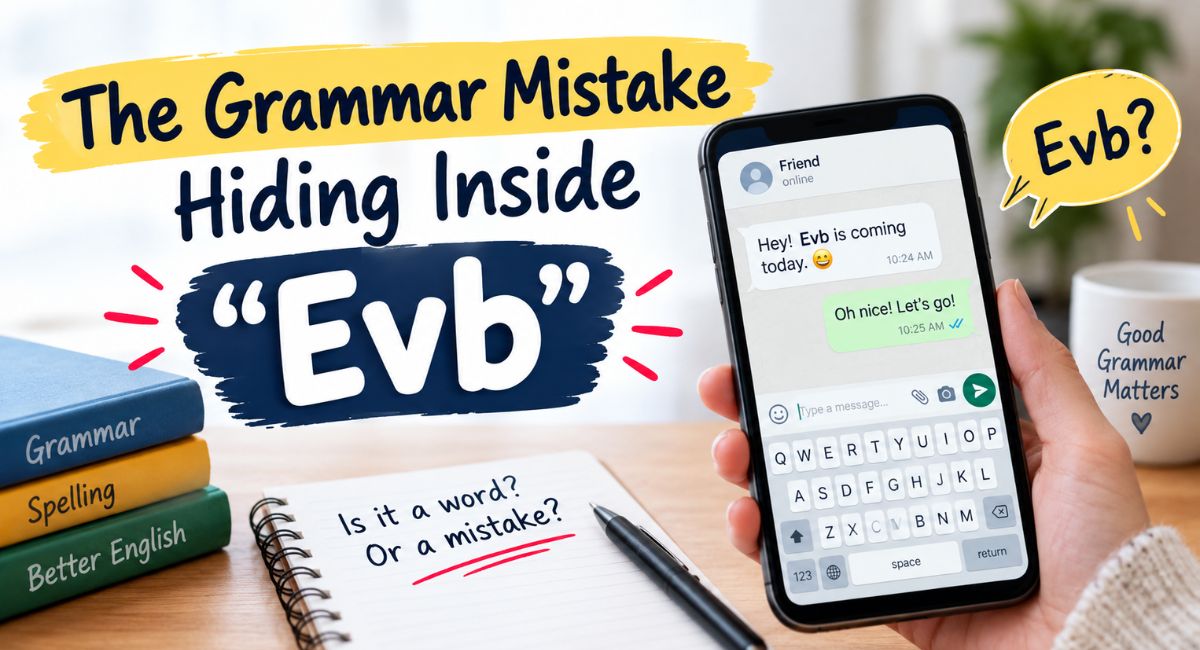
The Grammar Mistake Hiding Inside “Evb”
Here’s the part most guides skip entirely, and it’s the reason this word trips up even fluent English speakers.
“Everybody” is a singular indefinite pronoun. Even though it refers to a group of people, English grammar treats it as one singular unit — the same way “everyone,” “somebody,” and “nobody” all take singular verbs.
- ✅ “Everybody is invited.”
- ❌ “Everybody are invited.”
Because “evb” is just a shortcut for “everybody,” the exact same rule carries over — but in casual texting, people often forget it and pair “evb” with a plural verb because it feels like it’s talking about many people.
- ✅ “Evb is coming to the party.”
- ❌ “Evb are coming to the party.” (a very common mistake)
- ✅ “Evb knows about the change.”
- ❌ “Evb know about the change.” (also common)
This isn’t a rule that matters in a fast group chat with friends — nobody’s grading your texts. But it matters the moment “evb” (or “everybody”) shows up in an email, a caption for a brand account, a school assignment, or anything a teacher, client, or manager will read.
Real Chat Examples: Where “Evb” Actually Shows Up
Maya: did evb see the announcement in the group chat?? Jordan: yeah i think evb already knows lol Maya: good bc i didn’t wanna be the one to explain it again 😭
Instagram comment: “shoutout to evb who showed up for the fundraiser 🙌 couldn’t have done it without you”
Discord mod: “hey evb, server rules just got updated — check pinned msg before posting” Random member: “wait evb has to re-read it?? even old members?” Mod: “yep, evb 😅”
Notice something across all three: nobody writes “Evb” with a capital E, and it’s always tucked into a casual sentence — never in a formal-sounding one.
Grammar-First Breakdown: The Part Most “Meaning” Articles Skip
Part of Speech
“Evb” functions as a pronoun substitute — it stands in for “everybody,” which is itself an indefinite pronoun. It isn’t a noun, adjective, or verb; it always plays the role a pronoun would play in the sentence (“evb knows,” “tell evb,” “thanks to evb”).
Subject-Verb Agreement
As covered above, this is the biggest grammar trap: treat “evb” as singular every time it’s the subject of a sentence.
| Sentence | Correct? | Why |
| Evb is here | ✅ | Singular verb matches singular pronoun |
| Evb are here | ❌ | Common mistake — plural verb doesn’t match |
| Evb knows the plan | ✅ | Singular verb “knows” |
| Evb know the plan | ❌ | Missing the “-s” that singular subjects need |
Capitalization
In casual texting, “evb” is almost always lowercase, even mid-sentence — the same informal convention as “lol” or “btw.” It only gets capitalized if it opens a sentence, and even then, many casual texters skip that rule entirely on purpose because the tone is meant to feel relaxed, not formal.
Punctuation
“Evb” doesn’t need any special punctuation around it — no apostrophes, no quotation marks. The one exception is the possessive form: if you mean “everybody’s,” you write “evb’s” (with an apostrophe-s), not “evbs.”
- ✅ “This is evb’s problem now.”
- ❌ “This is evbs problem now.”
Formal vs. Casual Usage
“Evb” belongs strictly in informal writing — texts, DMs, group chats, casual captions. Swap it for the full word “everybody” or “everyone” in emails, school assignments, resumes, or any professional communication. Using “evb” in a formal context reads the same way “u” or “gr8” would — it signals casual register even if the rest of the sentence is polished.
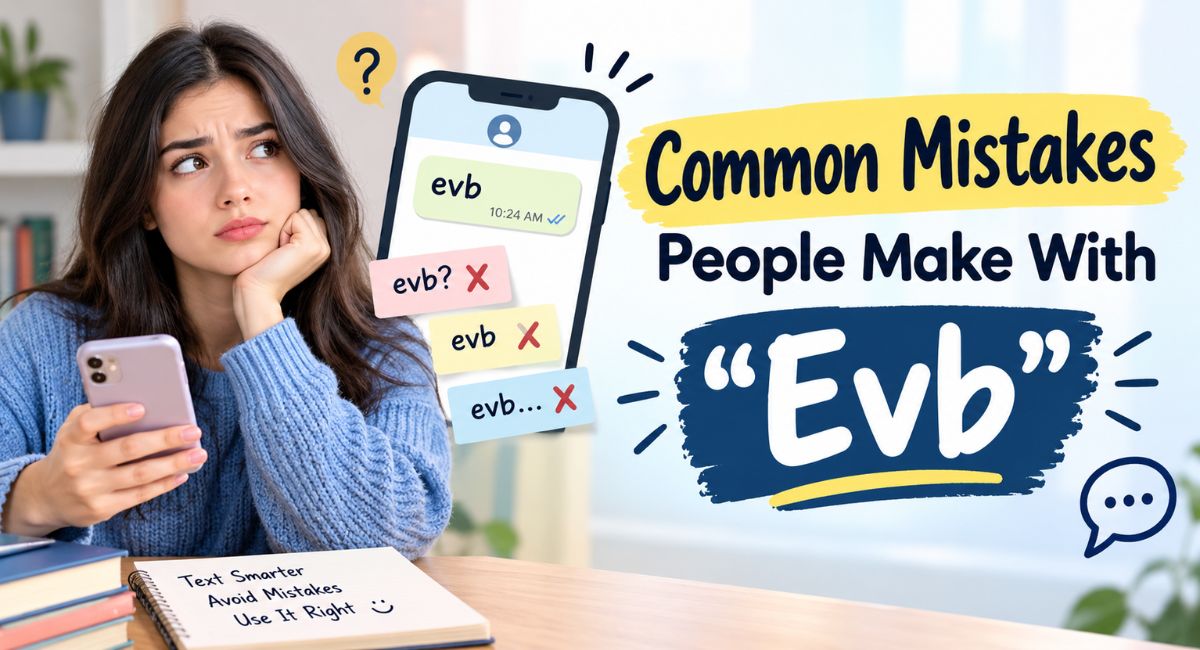
Common Mistakes People Make With “Evb”
- Pairing it with a plural verb — “evb are,” “evb know,” “evb have” are all grammatically off; “evb” always wants the singular form.
- Adding an apostrophe where it doesn’t belong — writing “evb’s” when you just mean “evb” (plain, not possessive).
- Using it in formal writing — it reads as unprofessional outside of casual chat contexts.
- Confusing it with similar-looking abbreviations — “evb” (everybody) is unrelated to “evp” or technical uses of “EVB” in electronics (Evaluation Board) and engineering contexts, where the capital-letter version means something entirely different.
“Evb” vs. Similar Group-Address Words
| Term | Full Meaning | Grammatically Singular or Plural? | Typical Register |
| Evb | Everybody | Singular | Very casual |
| Ppl | People | Plural | Casual |
| Yall | You all | Plural (informal) | Casual, regional |
| Everyone | Everyone | Singular | Neutral to formal |
| Folks | Group of people | Plural | Friendly, semi-formal |
Related Reads
- TT Meaning on TikTok: What It Actually Stands For
- “Ing” Meaning in Text: Why People Send Just That

Frequently Asked Questions
What does “evb” mean in a text? “Evb” means “everybody.” People use it in texts, group chats, and social captions as a shorter way to address or refer to everyone in the conversation.
Is “evb” grammatically singular or plural? Singular. “Evb” is short for “everybody,” and “everybody” always takes a singular verb — for example, “evb is” and “evb knows,” not “evb are” or “evb know.”
Should “evb” be capitalized? Not usually. In casual texting, it stays lowercase even in the middle of a sentence, the same way “lol” or “brb” typically do. It’s only capitalized if it starts a sentence and the writer is being deliberately formal.
Can I use “evb” in a formal email or school assignment? No. “Evb” is strictly informal. Use the full word “everybody” or “everyone” in emails, assignments, resumes, or any writing that needs a professional tone.
Does “evb” ever mean something other than “everybody”? Yes, but only in unrelated technical contexts. In electronics or engineering, capitalized “EVB” can stand for “Evaluation Board.” In everyday texting and social media, though, it almost always means “everybody.”