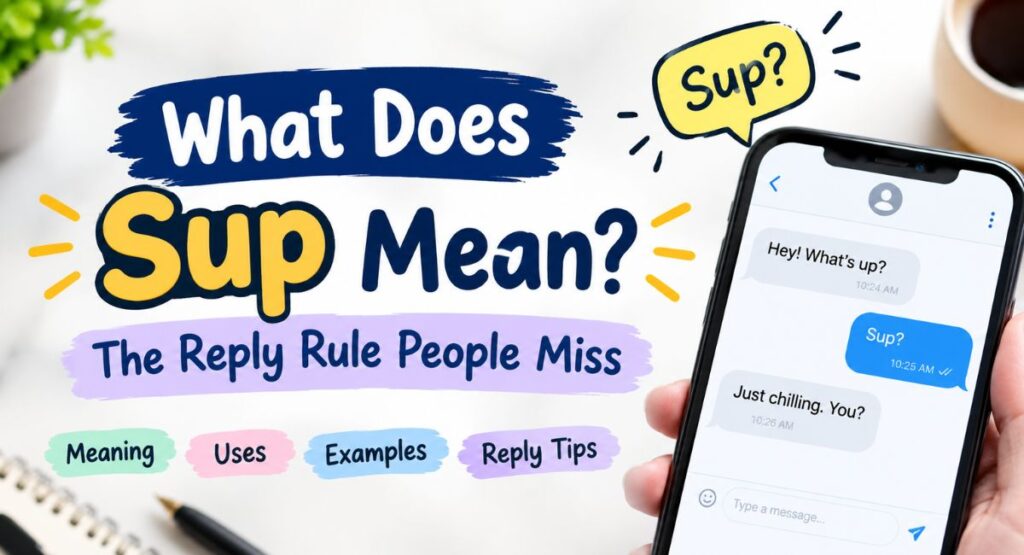
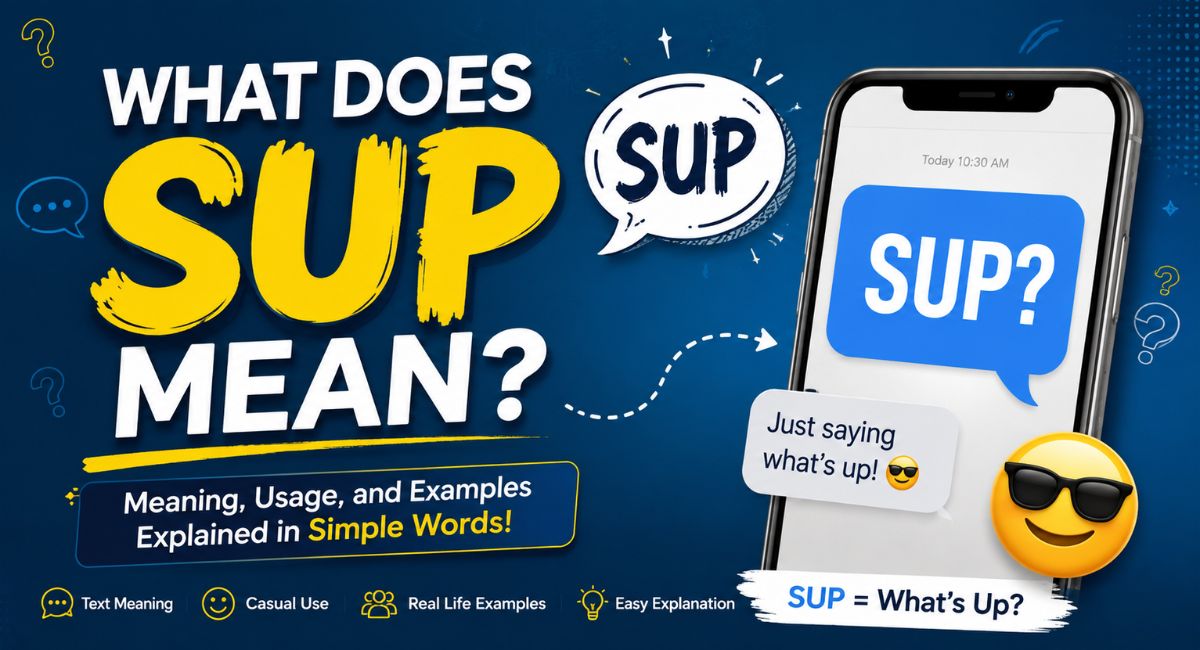
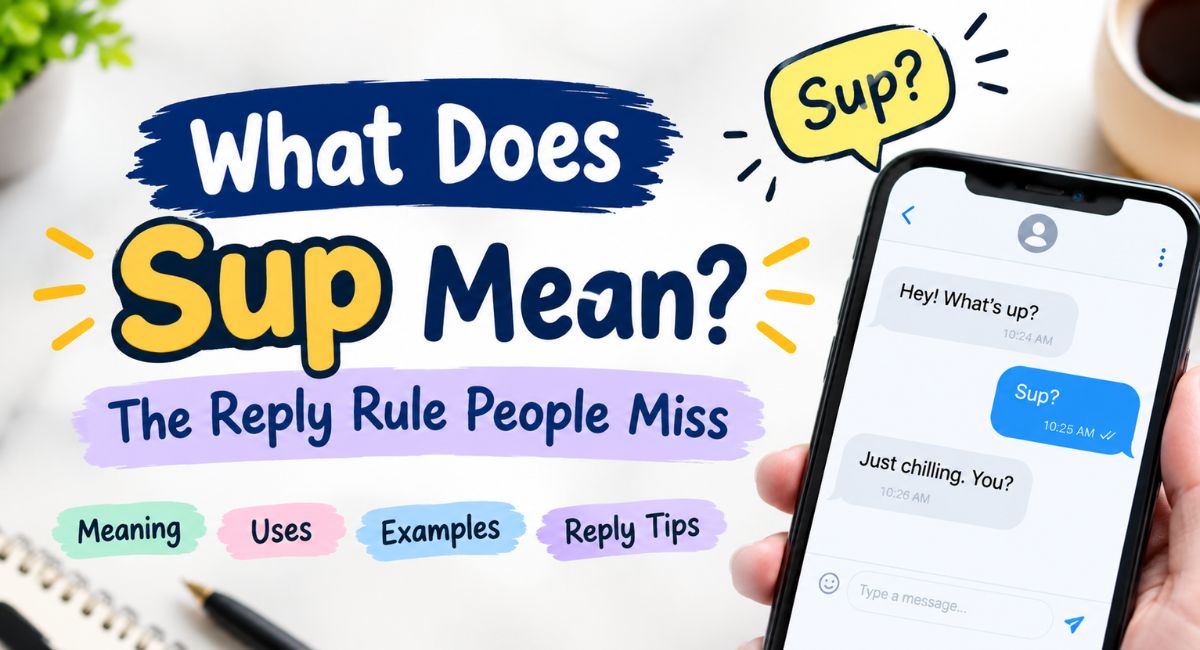
Sup mean Quick Answer: “Sup” is short for “what’s up” — a casual, low-effort greeting used to open a conversation rather than request real information. It rarely wants a detailed answer; it’s a social signal that says “I’m here, are you around to talk?” How you should reply depends almost entirely on who sent it and what your relationship is.
Most guides jump straight to reply ideas. Understanding why “sup” works the way it does — and why it isn’t really a question — makes those replies land better.
Where “Sup” Actually Comes From
“Sup” traces back to African American Vernacular English (AAVE), where shortened greetings like “what’s up” and later “sup” became common informal check-ins by the mid-20th century. It spread into mainstream youth culture through hip-hop in the 1980s and 90s, then made the jump to digital text during the early AIM and SMS era — when character limits and slow T9 keypads made every shortened word worth using.
That history matters because it explains why “sup” carries almost no real information request: it was built for efficiency and connection, not for detail.
Real Chat Examples
Example 1 — From a close friend
Friend: “sup” You: “not much, just avoiding my inbox lol. you?”
Here, “sup” is just opening the door — a one-word “nothing” would technically answer it, but adding a small detail keeps the exchange going naturally.
Example 2 — From a crush
Crush: “sup” You: “just thinking about what I’m gonna have for dinner, very important decisions happening rn 😄”
This response treats “sup” as an invitation rather than a real question — playful, low-stakes, and easy to keep talking from.
Example 3 — From a coworker
Coworker: “sup” You: “hey! just finishing up the report, how’s your afternoon going?”
Same word, completely different register — professional but still warm, without slipping into overly casual slang back.
The rule of thumb: “sup” almost never wants a literal status update. It wants to know if you’re available and open to talking — so the best replies acknowledge that, then hand the conversation back.
Grammar & Common Mistakes
- Why no question mark: Even though “sup” functions like a question, it’s technically a phatic expression — language whose job is social bonding, not information exchange — which is why it almost never appears with a question mark in casual texting (“sup” not “sup?”).
- Capitalization: Lowercase “sup” is the default and reads as relaxed. “Sup” with a capital S can appear at the start of a longer message without changing tone. All-caps “SUP” is rare and can read as shouted or overly intense.
- Common mistake: Answering with only “nothing” or “nm” (not much) and stopping there. Since “sup” is an invitation to continue, a flat one-word reply can unintentionally signal disinterest.
- Common mistake: Using “sup” in a first message to someone you don’t know well. Without established rapport, it can come across as too casual or even dismissive.
When to Use (and Avoid) “Sup”
Good fits:
- Opening a casual chat with friends or people you know well
- Group chats where a low-effort check-in is normal
- Replying to someone who greeted you the same way
Avoid it:
- First messages to someone you don’t know
- Professional emails or formal messages — use a full greeting instead
- Situations where you actually want a detailed update — ask a specific question instead
“Sup” vs. Similar Greetings
| Greeting | Formality | Expects Detail? | Best Used With |
| Sup | Very casual | No | Friends, established contacts |
| What’s up | Casual | Sometimes | Friends, semi-casual contacts |
| Hey, how are you | Neutral | Often | Anyone, including new contacts |
| Yo | Very casual | No | Close friends |
“Sup” sits at the most minimal end of this scale — it’s built to ask for almost nothing while still opening a conversation.
Related Reads
Sup mean: FAQs
What does “sup” mean in chat? “Sup” is short for “what’s up” — a casual greeting used to open a conversation, not a literal request for detailed information.
Why doesn’t “sup” have a question mark? Because it functions as a phatic expression — its job is social connection rather than genuinely seeking information — so it’s typically written without a question mark in casual texting.
Where did “sup” come from? “Sup” is rooted in African American Vernacular English, popularized through hip-hop culture in the 1980s–90s, and carried into digital texting during the early AIM and SMS era.
Is it rude to reply “nothing” to “sup”? It can unintentionally read as disinterest, since “sup” is meant to open a conversation — adding a small detail or a question back keeps the exchange going.
Can I use “sup” with someone I just met? It’s best avoided — without established rapport, it can come across as too casual for a first interaction.