You saw three letters — JOI — somewhere you weren’t expecting. Maybe it was in a browser history, a comment thread, or a group chat. And now you’re here, typing “JOI meaning” into Google, hoping for a straight answer.
Good instinct. This isn’t a term you should just shrug off or guess at.
Here’s the direct answer: JOI is an internet acronym almost always tied to adult content categories online. It is not casual Gen Z slang, it’s not a compliment or an insult, and it doesn’t have a playful meaning like what “sus” means or other everyday abbreviations.
Below, we’ll cover exactly what it stands for, where it shows up, whether it has any non-explicit meanings, and — if you’re a parent or guardian who found this term somewhere unexpected — what to actually do about it.
What Does JOI Mean? (Quick Answer)
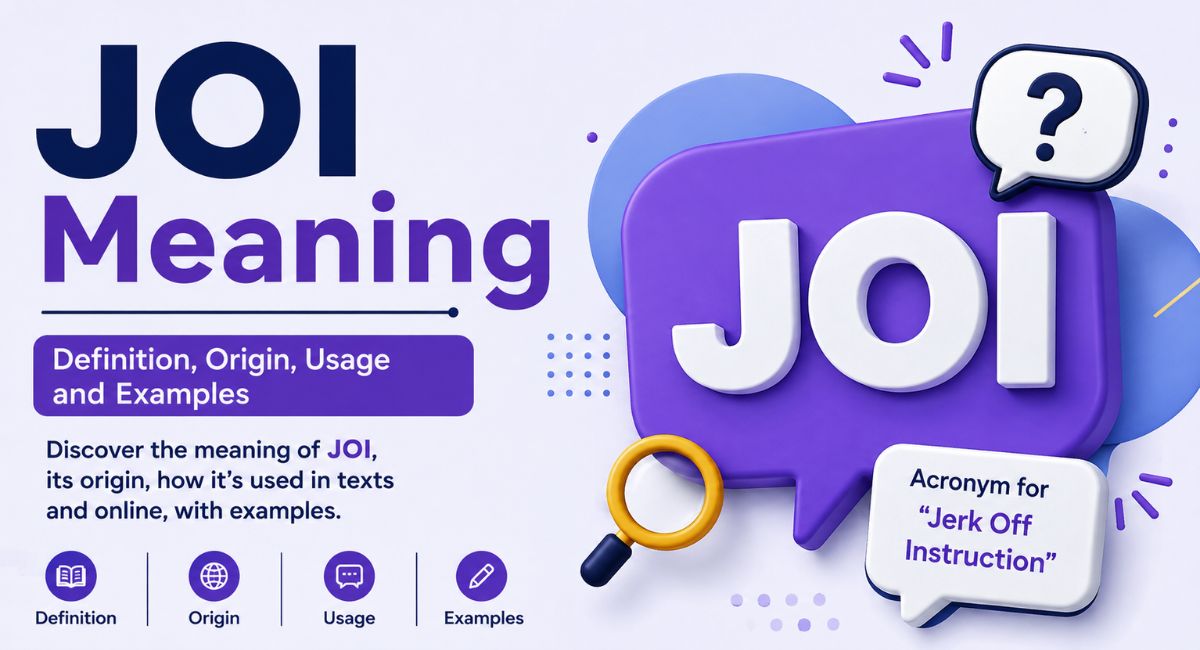
QUICK ANSWER: JOI stands for “Jerk Off Instruction.” It is a category label used on adult content platforms to describe explicit instructional videos. It is not appropriate for minors and has no innocent, everyday usage in normal conversation.
That’s the full definition — we’re not going to walk you through examples of how the content is used or labeled on adult sites, because that’s not helpful information; it’s just more exposure to something you’re trying to understand, not participate in.
What matters practically:
- It is an adult-industry term, not youth slang.
- It has one dominant meaning online — there’s no widely-used innocent alternative when it appears in a slang or acronym search.
- Seeing it does not automatically mean wrongdoing — algorithms, ads, autofill, and accidental clicks account for a huge share of how people encounter unfamiliar acronyms online.
Is “JOI” Ever Used to Mean Something Else?
This is where our answer differs from most slang sites — and it’s worth knowing, because context genuinely changes what you’re dealing with.
1. As a Name
Joi (sometimes spelled Joy or Joie) is a legitimate given name, most often feminine. If “JOI” appears capitalized in a birthday message, a tagged photo, or a name field on a form, it’s very likely just someone’s name — not the acronym.
2. As a Business or Academic Acronym
Depending on industry, JOI can also (rarely) stand for organization-specific terms — for example, some companies and journals use it as shorthand in internal documents (e.g., “Journal of…” naming conventions). If you saw it in a professional, academic, or corporate context, it’s almost certainly unrelated to the adult content meaning.
3. As the Internet Acronym
If you encountered it on social media, in a chat with strangers, on a forum, or in a search history alongside other unfamiliar terms, the adult content meaning is by far the most likely one.
Quick way to tell the difference:
| Context Where You Saw “JOI” | Likely Meaning |
| A form, name tag, birthday card, or introduction | Someone’s first name |
| A company report, journal, or internal doc | Organization-specific acronym |
| Social media, forums, chat apps, browser history | The internet/adult content acronym |
| Alongside other slang or acronyms you don’t recognize | The internet/adult content acronym |
Where This Term Typically Appears
Without going into detail that doesn’t help you, it’s useful to know where this acronym is commonly encountered so you can recognize the context:
- Search engines and browser history — most often how parents or partners first discover it.
- Adult content platforms and forums — where it functions as a content category tag.
- Private messaging apps — occasionally referenced between consenting adults discussing content preferences.
It is rarely, if ever, used on mainstream platforms like Instagram, TikTok, or LinkedIn in its literal sense, because those platforms actively restrict explicit content and terminology.
Is “JOI” Safe for Kids to See or Search?
No. This is one of the clearest cases in internet slang — there is no gray area here.
- The term has no innocent everyday meaning in the context most searches occur in.
- If a child or teen searched this term or it appeared in their activity, it indicates they encountered adult content, even if accidentally.
- Content filters on major platforms typically block the sites associated with this term, but the acronym itself can slip through basic text filters since it looks like a random three-letter combination.
What to Actually Do If You Found This in a Child’s Search History
- Stay calm before reacting. Curiosity — including accidental exposure via ads, pop-ups, or a mistyped search — is extremely common and doesn’t automatically mean intentional seeking-out.
- Have an age-appropriate, non-judgmental conversation. Ask open questions rather than leading with accusations.
- Review and strengthen parental controls — most devices, browsers, and routers allow keyword and category-level filtering, not just site blocking.
- Check what led them there. Often it’s a linked ad, a shared meme, or a search suggestion — not deliberate searching.
- Keep the conversation ongoing, not a one-time lecture. Digital literacy works better as an open dialogue than a single “talk.”
What to Do If a Partner, Friend, or Colleague Uses This Term
Context matters a lot here too:
- Between consenting adults in a private conversation — this is a personal matter and not inherently concerning.
- In a professional or public setting (work Slack, group chat, public comment) — it’s a boundary and appropriateness issue worth addressing directly.
- From someone you don’t know well — treat it the same way you’d treat any unsolicited adult content: block, report, or disengage as needed.
Common Mistakes People Make With This Term
- Assuming it’s Gen Z slang. It isn’t — it originated in adult content communities, not youth internet culture.
- Panicking without checking context first. A name field or academic document is very different from a chat history.
- Searching for “examples” to understand it better. You don’t need examples to understand the definition — the acronym expansion above is the complete answer.
Quick Recap: JOI Meaning at a Glance
- Full form: Jerk Off Instruction
- Category: Adult content acronym
- Kid-safe? No
- Common alternate meaning? Occasionally a first name (Joi/Joy/Joie) or an organization-specific acronym
- Where it’s usually seen: Adult platforms, forums, private chats, search/browser history
- What to do if you see it: Check the context first — then act accordingly (conversation, filters, or simply move on if it’s just a name)
Frequently Asked Questions
What does JOI stand for?
JOI stands for “Jerk Off Instruction,” an acronym used to label a category of explicit adult content. It does not have a common innocent meaning when found in online slang or search contexts.
Is JOI a common texting abbreviation among teens?
No. JOI is not youth or Gen Z slang — it originated in adult content communities and is not commonly used in casual teen texting the way abbreviations like “smh” or “wyd” are.
Can JOI just be someone’s name?
Yes. “Joi” (also spelled Joy or Joie) is a legitimate first name. If you saw it capitalized in a name field, introduction, or personal message rather than a slang or search context, it’s likely just a name.
Should I be worried if I found “JOI” in my child’s search history?
It’s worth addressing calmly. Since the term has no widespread innocent meaning in search contexts, finding it usually indicates exposure to adult content — sometimes accidental. Have an open conversation and review parental controls rather than reacting with alarm.
Does JOI appear on mainstream platforms like Instagram or TikTok?
Rarely in its literal sense. Mainstream platforms restrict explicit content and terminology, so if you see “JOI” there, it’s more likely a name, unrelated acronym, or someone being deliberately vague to bypass content filters.