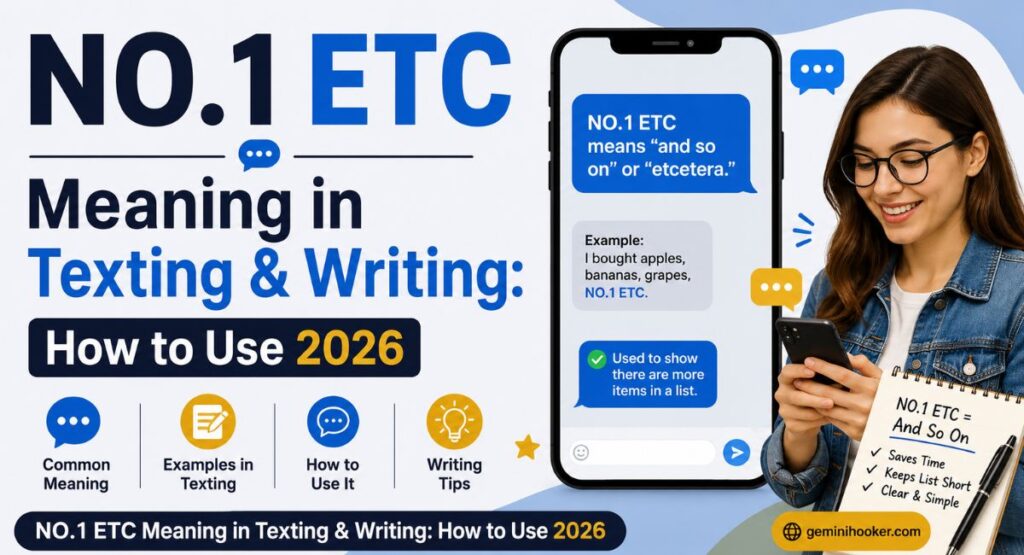
“Etc.” is an abbreviation of the Latin phrase “et cetera,” meaning “and the rest” or “and so on.” It’s used to shorten a list when the remaining items are implied or unimportant to name. Common mistakes include writing “and etc.” (redundant, since “et” already means “and”) and mispronouncing it “ex-cetera” instead of “et-set-era.”
Two Latin Words Everyone Uses and Almost No One Notices
“Etc.” shows up in grocery lists, essays, contracts, and texts, but it’s rarely treated like the two-word Latin phrase it actually is. “Et” means “and,” and “cetera” means “the rest” or “the others” — together, “et cetera” literally translates to “and the rest.” Once you see it as two separate words instead of one abbreviation, a few common mistakes start making a lot more sense.
This guide covers where “etc.” came from, how to punctuate it correctly in a sentence, when it’s fine to use in a text versus a formal document, and the specific errors that trip people up most — starting with the one hiding in plain sight above.

Grammar First: How “Etc.” Actually Works
Part of Speech and Structure
“Etc.” functions as an adverbial phrase standing in for an unstated list continuation. It’s not a noun, verb, or conjunction on its own — it’s shorthand for “and other similar things,” attached to the end of a list.
The Redundancy Mistake: “And Etc.”
Because “et” already means “and,” writing “and etc.” is grammatically redundant — it translates to “and and the rest.” This is one of the most common errors tied to the term, and it happens because writers forget “etc.” already contains its own “and.”
- ❌ Incorrect: “Bring snacks, drinks, and etc.”
- ✅ Correct: “Bring snacks, drinks, etc.”
Punctuation Rules
- Always include the period. “Etc.” is an abbreviation, so it needs the period even mid-sentence: “apples, oranges, etc., are on sale” — note the second comma after “etc.” when the sentence continues.
- Comma before “etc.” in a list. Standard usage places a comma before “etc.” just as you would before any final list item: “pens, notebooks, etc.”
- Comma after “etc.” only if the sentence continues. “We packed shirts, socks, etc., before leaving” needs a comma after “etc.” because the sentence keeps going; “We packed shirts, socks, etc.” at the end of a sentence does not.
- Never italicize it in modern usage. While “etc.” originates from Latin, it’s fully absorbed into English and doesn’t need italics the way a less common Latin phrase might.
Pronunciation
“Etc.” is pronounced “et-SET-er-uh,” not “ex-SET-er-uh.” The mix-up happens because the “t” and “c” next to each other visually suggest an “x” sound, but there’s no “x” in the word at all — it’s et, then cetera.
When to Use “Etc.” (and When Not To)
“Etc.” works best when the remaining list items are genuinely obvious or unimportant to spell out. It works less well when precision actually matters — a legal document, a recipe with specific substitutions, or a list where the reader can’t safely guess what’s missing.
- Good use: “The kit includes screws, bolts, washers, etc.” — the reader doesn’t need every fastener named.
- Weak use: “Please bring your ID, proof of address, etc.” for a specific bureaucratic process — here, vague items could mean a rejected application, so spelling out the actual requirements matters more than brevity.
Real Chat and Writing Examples
Group project chat Dana: what do we still need for the slides Theo: just formatting, sources, etc. — should be quick
Formal email “Please find attached the invoice, contract, receipts, etc., for your records.”
Grocery list text Mom: get milk, eggs, bread etc if the store has it
Notice the difference: the group chat and grocery list drop the comma before “etc.” entirely (common in casual texting), while the formal email keeps both commas because the sentence continues past “etc.” — a small detail that instantly signals a more careful, professional register.
Comparison Table: “Etc.” in Different Contexts
| Context | Typical Usage | Formality | Common Slip |
| Formal writing / email | “items, documents, etc., are required” | High | Missing the period or the trailing comma |
| Casual texting | “milk, eggs, etc” | Low | Dropping the period entirely (acceptable casually, not formally) |
| Academic / legal writing | Often avoided in favor of full lists | Very high | Using “etc.” where precision is actually required |
| Spoken conversation | “et-set-era” | N/A | Mispronouncing it “ex-cetera” |
Common Mistakes People Make With “Etc.”
- Writing “and etc.” As covered above, this duplicates the “and” already built into “et cetera” — drop the extra “and” every time.
- Using “etc.” for people. “Etc.” technically refers to things, not people; for a list of people, “et al.” (and others) is the correct Latin abbreviation instead.
- Ending a list with “etc.” when the items aren’t actually similar. “Etc.” implies the remaining items follow the same pattern as the ones already listed — using it after a random, unrelated list can confuse rather than clarify.
- Forgetting the period in formal writing. “Ect” or “etc” without the period might pass in a text, but it reads as a typo in an email, report, or essay.
- Overusing it as a substitute for real detail. Ending nearly every list with “etc.” instead of actually finishing the thought is a habit that reads as unfinished writing, especially in professional documents.
Related Reads
FAQs
What does “etc.” stand for? “Etc.” is short for the Latin phrase “et cetera,” meaning “and the rest” or “and so on.” It’s used to shorten a list when the remaining items are implied.
Is “and etc.” correct? No. “Et” in “et cetera” already means “and,” so “and etc.” is redundant. The correct form is simply “etc.” at the end of a list.
How do you pronounce “etc.”? It’s pronounced “et-SET-er-uh,” not “ex-SET-er-uh.” There’s no “x” sound in the word, even though the letters can visually suggest one.
Do you need a comma before and after “etc.”? Yes, in formal writing: a comma goes before “etc.” as with any list item, and a second comma follows it only if the sentence continues past that point.
Can “etc.” be used for a list of people? Not technically — “etc.” refers to things. For a list of people, “et al.” (Latin for “and others”) is the grammatically correct substitute.